The day J.D. Salinger died I spent 7 hours polishing candlesticks in a Zen temple.
I found out a day later,
tonight,
sitting at a wooden table in the winter corner of the temple library,
having just copied down my lineage,
carefully,
trying to memorize by lamplight.
I can think of no more fitting memorial.
"All we do our whole lives is go from one little piece of holy ground to the next." -J.D.S.
April 15, 2010

January 26th, 2010 - Zen Temple, Pennsylvania
I feel peace after a long day.
This morning after meditation at an art gallery, we went to visit a man about my age in the hospital, dying of cancer. Mike.
His family was taking him off life support today. He is, as they say, survived by his parents, wife and 1 1/2 year old baby. Sensei of the Plains was awesome. She held his hand and did a guided meditation with him. Though he can't talk, he calmed down visibly when she said that he could welcome all the fear and anxiety he has, just sit with it, and welcome it as a sign of love and caring for his family, friends and life. Through welcoming it and sitting with it, he could find peace.
His big, Midwestern-feeling dad sat on the other side of him and held his other hand and cried. Sensei filled a space she knew they needed. It was beautiful.
The rest of the afternoon, I sat with my own anxiety about Haiti--about not knowing or doing enough--wishing I was more, that I was better able to help. Zen and the art of going to Haiti, to home. On CNN they say the U.S. is legislating ways to make adopting Haitian children easier.
A mixed bag, that--but here it is, a step on my path.
May I do it well, sitting with the anxiety and fear as well as a brave man I barely had the pleasure to meet.
This morning after meditation at an art gallery, we went to visit a man about my age in the hospital, dying of cancer. Mike.
His family was taking him off life support today. He is, as they say, survived by his parents, wife and 1 1/2 year old baby. Sensei of the Plains was awesome. She held his hand and did a guided meditation with him. Though he can't talk, he calmed down visibly when she said that he could welcome all the fear and anxiety he has, just sit with it, and welcome it as a sign of love and caring for his family, friends and life. Through welcoming it and sitting with it, he could find peace.
His big, Midwestern-feeling dad sat on the other side of him and held his other hand and cried. Sensei filled a space she knew they needed. It was beautiful.
The rest of the afternoon, I sat with my own anxiety about Haiti--about not knowing or doing enough--wishing I was more, that I was better able to help. Zen and the art of going to Haiti, to home. On CNN they say the U.S. is legislating ways to make adopting Haitian children easier.
A mixed bag, that--but here it is, a step on my path.
May I do it well, sitting with the anxiety and fear as well as a brave man I barely had the pleasure to meet.
January 24th, 2010 - Zen Temple, Pennsylvania
"Sometimes if we don't do anything, we help more than if we do a lot. We call that non-action. It is like a calm person on a small boat in a storm." - Thich Nhat Hanh
To send peace, I must be peace.
---
Running down hills and gullies in Pennsylvania,
with springs, rusts and browns, and pine
behind a Zen priest of the plains and her very happy dog.
---
Yesterday, Sensei of the Plains said:
"I am Haiti. Would I starve my finger? Of course not--it doesn't even make sense."
Interdependency.
To send peace, I must be peace.
---
Running down hills and gullies in Pennsylvania,
with springs, rusts and browns, and pine
behind a Zen priest of the plains and her very happy dog.
---
Yesterday, Sensei of the Plains said:
"I am Haiti. Would I starve my finger? Of course not--it doesn't even make sense."
Interdependency.
January 21st, 2010 - Zen Temple, Vermont
Today I learned to chant my lineage, teacher to student, all the way back to Buddha.
Wow.
No pressure or anything.
Wow.
No pressure or anything.
January 20th, 2010 - Zen Temple, Vermont
My alarm didn't go off and Sensei had food poisoning in the night. When I didn't appear at my usual Ungodly Hour, she dragged herself out to my cabin to be sure I wasn't dead.
I only had a touch of what hit her fast and terribly, making its mark and moving along. She said, laughing, that she passed out in the bathroom, thought she was going to die, and wrote me a note saying "Don't eat the sprouts!"
Glad to know what her parting message of wisdom would be to me. Perfectly Zen.
As my stomach gurgled and threatened all day, my body became tired and I struggled to meditate. Then I remembered what she said about being buried. Stop struggling and remember how to get to the center. Know how to get there from wherever you are.
She says I need a mantra or some reminder, so if death or pain comes quickly I can think of that rather than "oh, shit!"
I practiced quieting my own struggle tonight, sitting through a lot of pain and exhaution and sickness. It's the best possible practice. Exactly why I am here.
Tomorrow I try again.
I only had a touch of what hit her fast and terribly, making its mark and moving along. She said, laughing, that she passed out in the bathroom, thought she was going to die, and wrote me a note saying "Don't eat the sprouts!"
Glad to know what her parting message of wisdom would be to me. Perfectly Zen.
As my stomach gurgled and threatened all day, my body became tired and I struggled to meditate. Then I remembered what she said about being buried. Stop struggling and remember how to get to the center. Know how to get there from wherever you are.
She says I need a mantra or some reminder, so if death or pain comes quickly I can think of that rather than "oh, shit!"
I practiced quieting my own struggle tonight, sitting through a lot of pain and exhaution and sickness. It's the best possible practice. Exactly why I am here.
Tomorrow I try again.
January 19th, 2010 - Zen Temple, Vermont
I decided, fully and completely, to stay. I will be more ready for Haiti in March.
I answered emails today, rethought short and long-term partnerships in Haiti, and my center didn't become muddled.
I stopped struggling in meditation, in moments. The pain remained but I sat in peace. Sensei said that had been her prayer for Haiti. She buried herself alive and sat, and sent peace. Stopped struggling.
I answered emails today, rethought short and long-term partnerships in Haiti, and my center didn't become muddled.
I stopped struggling in meditation, in moments. The pain remained but I sat in peace. Sensei said that had been her prayer for Haiti. She buried herself alive and sat, and sent peace. Stopped struggling.
January 18th, 2010 - Zen Temple, Vermont
I now understand why they put monasteries in the middle of nowhere. Half of us would make a run for it if there were anywhere else to go.
---
Sensei asks me to write a letter to my formal Zen teacher. What to write to an older Japanese man who speaks in cryptic riddles and who I don't understand in the least but would trust with my life? Sensei is out, so I spend a few minutes of rebellion thinking of highly inappropriate ways to begin the letter . . .
"Yo Sensei--what up, dawg?"
After days of staring at a wall, it seemed like the funniest thing on earth. Almost peed my pants laughing.
The rest of the afternoon, I folded complex origami envelopes to hold a special New Year's formal greeting for my teacher. Confusing, but after the initial bout of swearing, ridiculously happy-making! the key is to keep in mind how he will feel when he gets it, and now to care if the first thing he feels is amused at how bad Americans are at precision.
---
108 bows and very, very sleepy.
suddenly with knees of an old lady.
in the monastery they do 1,000 a day.
crap.
---
Sensei asks me to write a letter to my formal Zen teacher. What to write to an older Japanese man who speaks in cryptic riddles and who I don't understand in the least but would trust with my life? Sensei is out, so I spend a few minutes of rebellion thinking of highly inappropriate ways to begin the letter . . .
"Yo Sensei--what up, dawg?"
After days of staring at a wall, it seemed like the funniest thing on earth. Almost peed my pants laughing.
The rest of the afternoon, I folded complex origami envelopes to hold a special New Year's formal greeting for my teacher. Confusing, but after the initial bout of swearing, ridiculously happy-making! the key is to keep in mind how he will feel when he gets it, and now to care if the first thing he feels is amused at how bad Americans are at precision.
---
108 bows and very, very sleepy.
suddenly with knees of an old lady.
in the monastery they do 1,000 a day.
crap.
January 17th, 2010 - Zen Temple, Vermont
Day of meditation with 12 people. Lovely to share the day that way.
Sensei gave a talk on Haiti and the cause of suffering. Over carrot juice and boiled tofu that tasted like the best stuff on earth, she explained.
Haiti is on everyone's mind. We must address it, and dedicate the day's sitting to Haiti. She encouraged donations, and a re-examination of the root cause.
It was not an earthquake. If people's houses had been properly built, non right on top of one another . . . And why were all those people in the capitol? (Or on the island in the first place, I add.)
Systems of greed. A good conversation over tea after the day's sit, between the 12 of us. The conversation again encircled Haiti, our privilege, our way of taking things for granted. They talked again of donating. I said something about remembering not to get too "oh, those poor Haitians" about it all.
I said it, I hope, more kindly than it is written here.
Just as the systems of greed bound us up together, my liberation is bound up with Haiti's. I need the community connectedness, the spontaneous expressions of joy. Even this week, I am relying on an African-Haitian belief that my sending of energy can be felt by a man holding a gun and taking advantage of the chaos and the fear.
Brother, put it down and use your strength to rebuild your country. As one of the lovely, older women today said: "All anyone ever needs to feel is that they are whole, and ok just as they are." Brother, you are loved. Stand up to your friends and put down the gun. Look around you.
As Sensei said, the best way to help is to simply make yourself available. People will draw out what they need. Haiti is one symbol. There is suffering (and, I add, liberation) everywhere.
Sensei gave me the temple's 2010 dedication card. The Japanese characters: Open, Liberation, a symbol for a man, a symbol for a woman. She said today she learned why. So did I.
Sensei gave a talk on Haiti and the cause of suffering. Over carrot juice and boiled tofu that tasted like the best stuff on earth, she explained.
Haiti is on everyone's mind. We must address it, and dedicate the day's sitting to Haiti. She encouraged donations, and a re-examination of the root cause.
It was not an earthquake. If people's houses had been properly built, non right on top of one another . . . And why were all those people in the capitol? (Or on the island in the first place, I add.)
Systems of greed. A good conversation over tea after the day's sit, between the 12 of us. The conversation again encircled Haiti, our privilege, our way of taking things for granted. They talked again of donating. I said something about remembering not to get too "oh, those poor Haitians" about it all.
I said it, I hope, more kindly than it is written here.
Just as the systems of greed bound us up together, my liberation is bound up with Haiti's. I need the community connectedness, the spontaneous expressions of joy. Even this week, I am relying on an African-Haitian belief that my sending of energy can be felt by a man holding a gun and taking advantage of the chaos and the fear.
Brother, put it down and use your strength to rebuild your country. As one of the lovely, older women today said: "All anyone ever needs to feel is that they are whole, and ok just as they are." Brother, you are loved. Stand up to your friends and put down the gun. Look around you.
As Sensei said, the best way to help is to simply make yourself available. People will draw out what they need. Haiti is one symbol. There is suffering (and, I add, liberation) everywhere.
Sensei gave me the temple's 2010 dedication card. The Japanese characters: Open, Liberation, a symbol for a man, a symbol for a woman. She said today she learned why. So did I.
January 16th, 2010 - Zen Temple, Vermont
No contact with the outside world today.
Just sitting, cleaning, eating, a walk in circles looking at trees, and a few long talks with Sensei.
Tonight, a sink full of Zen dishes put on the wooden counter, well washed.
My head is calm. My body pleasantly tired with a little bit of good pain.
Transfixed by how steam looks as it rises from my cup of hot water.
Just sitting, cleaning, eating, a walk in circles looking at trees, and a few long talks with Sensei.
Tonight, a sink full of Zen dishes put on the wooden counter, well washed.
My head is calm. My body pleasantly tired with a little bit of good pain.
Transfixed by how steam looks as it rises from my cup of hot water.
January 15th, 2010 - Zen Temple, Vermont
Meeting Sensei's mother, 95 and delighted by bunnies.
Shoveling snow off the roof of the wood shed.
Stacking wood.
A long walk in the woods by myself, and with every step a message of peace for a child in Haiti. It's ok, baby. Walk, find food, find water. Don't run until you see water--save your energy. Walk. You can do it. You are loved.
Or for my future brothers, my love, the men I will meet and those I will not: More strength to you, brothers. Use the anger. Find your superhuman strength and lift something heavy and find the ones still buried.
Or to the women, already connected to each other and singing: May I sing with foreign words til you teach me your songs?
Every step a prayer.
---
I got a near job offer with the UN in Haiti today--one I didn't apply for. My first thought was to jump on the next plane.
Sensei was stern. It would have been funny if it didn't hit me so hard. The sixty something year old petite Buddhist priest all but blocked the door. "Sit down!" she said. "Meditate. Think this through."
Shoveling snow off the roof of the wood shed.
Stacking wood.
A long walk in the woods by myself, and with every step a message of peace for a child in Haiti. It's ok, baby. Walk, find food, find water. Don't run until you see water--save your energy. Walk. You can do it. You are loved.
Or for my future brothers, my love, the men I will meet and those I will not: More strength to you, brothers. Use the anger. Find your superhuman strength and lift something heavy and find the ones still buried.
Or to the women, already connected to each other and singing: May I sing with foreign words til you teach me your songs?
Every step a prayer.
---
I got a near job offer with the UN in Haiti today--one I didn't apply for. My first thought was to jump on the next plane.
Sensei was stern. It would have been funny if it didn't hit me so hard. The sixty something year old petite Buddhist priest all but blocked the door. "Sit down!" she said. "Meditate. Think this through."
January 14th, 2010 - Zen Temple, Vermont
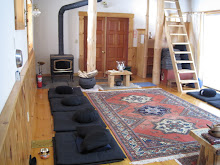
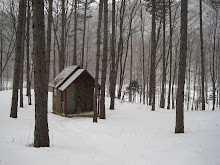
The place is cozy and made of wood, in the middle of a forest.
The priest is lovely and kind.
I use an outhouse in the snow at night and wood burning stoves.
We ate the lunch mom and dad packed for me for dinner and loved every bite.
Haiti is in ruins, and she (Sensei) knows I want to do something. I told her my long-standing plan to go there directly after the retreat, in April. Then I told her more about my relationship with Haiti than I've told most people; it's called me for a long time. She asked if I believe someone can send peace through pure meditation, making it easier for others half a world away.
I said I don't know. I know meditation helps me to balance, and without balance I have made muddles of my attempts to help in the past. At the same time, I said, sometimes people need straight up support, not metaphysical peaceful feelings. Strangely, this is almost what she'd said earlier in the day.
She had said sometimes people need crisis support, sometimes shifting of power and discussion of justice, and sometimes a peacefulness internally. Responding with infinite patience and internal peace isn't always what the doctor ordered.
She cuts to the heart of it, now at dinner, over dad's fudge, as snow falls gently outside the wooden windows.
She says, now I am here. She asked me to try to cultivate the mindset that pure meditation and prayer can change things for people.
She talked about studies where groups of meditators had come into violent places and changed the statistics. She knows I am willing to leave early if there is something concrete I can do. In the interim, while I am here, I should just sit. Sit and cultivate the mindset that the meditation is not for me. It is purely for, as she said, that kid sitting in the parking lot next to his dead mother, with nowhere to go.
Let that kid feel love and peace, enough to find a way to stand up. And, at the beginning and ending of each meditation session, I should beg with all my soul for it to work.
God bless her, that isn't very textbook Buddhist, but I guess that's why I love Buddhists--that was the only thing in that moment that could have made any sense to me. This woman can teach me.
So I turn out the light, look up at the stars through branches of winter trees, and I beg.
The priest is lovely and kind.
I use an outhouse in the snow at night and wood burning stoves.
We ate the lunch mom and dad packed for me for dinner and loved every bite.
Haiti is in ruins, and she (Sensei) knows I want to do something. I told her my long-standing plan to go there directly after the retreat, in April. Then I told her more about my relationship with Haiti than I've told most people; it's called me for a long time. She asked if I believe someone can send peace through pure meditation, making it easier for others half a world away.
I said I don't know. I know meditation helps me to balance, and without balance I have made muddles of my attempts to help in the past. At the same time, I said, sometimes people need straight up support, not metaphysical peaceful feelings. Strangely, this is almost what she'd said earlier in the day.
She had said sometimes people need crisis support, sometimes shifting of power and discussion of justice, and sometimes a peacefulness internally. Responding with infinite patience and internal peace isn't always what the doctor ordered.
She cuts to the heart of it, now at dinner, over dad's fudge, as snow falls gently outside the wooden windows.
She says, now I am here. She asked me to try to cultivate the mindset that pure meditation and prayer can change things for people.
She talked about studies where groups of meditators had come into violent places and changed the statistics. She knows I am willing to leave early if there is something concrete I can do. In the interim, while I am here, I should just sit. Sit and cultivate the mindset that the meditation is not for me. It is purely for, as she said, that kid sitting in the parking lot next to his dead mother, with nowhere to go.
Let that kid feel love and peace, enough to find a way to stand up. And, at the beginning and ending of each meditation session, I should beg with all my soul for it to work.
God bless her, that isn't very textbook Buddhist, but I guess that's why I love Buddhists--that was the only thing in that moment that could have made any sense to me. This woman can teach me.
So I turn out the light, look up at the stars through branches of winter trees, and I beg.
November 14, 2009
November 14th, From Juba to Yei, South Sudan to Kampala to . . .
Flying away from a week of training for another organization’s staff in Yei, South Sudan. The few-hour drive coming in from Juba was gorgeous, on an ugly road.
Round mud huts with thatched roofs and bamboo fences.
Men sitting under trees and chatting.
Army checkpoints, passed through with a smile and a wave.
Huge, rocky hills with flat tops and green and brown shrubs impossibly rising from the otherwise flat landscape, with only a few trees to otherwise break the flatness.
People seem so gentle, waving and smiling.
The man breaks my heart when he inquires politely:"Can you please offer me a lift to Yei?" and we have to say no because of the history, not because of him.
In the middle of the week of training, the Sudanese People’s Liberation Movement leadership announced a week of holiday so people can go register to vote. I know so little, but basically the vote is a national election, which will set the stage for a referendum in 2011, to determine whether to officially and permanently split South Sudan from the rest of Sudan. A long, hard fight preceded the choice, and there are a lot of fears around it. Almost 70 political parties registered for the election, but the woman who works there told me there is no real choice. She said it is weird when trucks full of men with guns are encouraging people to vote, when there’s no real choice but to vote for them . . .or the Sudanese Government.
Meanwhile back at work, participants agreed to stay through the holiday and the training continued. In the evenings, Evelyn and Jojo (my coworkers from Uganda) and a few great people from UK to Zimbabwe who work in South Sudan, danced and made trouble as best we could. We celebrated the new law against domestic violence that our organizations in Uganda finally pushed parliament to pass. We discovered new wines in individual serving bottles that taste dangerously like juice and strolled around the dusty, flat town full of more round thatched houses, graceful, polite people, and overgrown graveyards. Evelyn became obsessed with getting me a husband so I won’t leave East Africa, and kept pointing out particularly drunken and messy looking soldiers slouching by the side of the road as hot possibilities for me, just to see the look of amused horror on my face.
Today, we fly away, back home to Kampala.
At the field that doubles as the Yei airport, we sat and waited for our tiny plane to land with their passengers from Kampala, so we could get on and they could take us back. A man rolled up in a vehicle decorated in ribbons and bows, to greet a Mzungu (white person) who appeared to be a missionary coming to visit. Jojo laughed out loud, out of earshot of the men, and said to the man seated next to her: “He had to decorate his car to come and pick up the Mzungu!” The man laughed. I turned around, giggling, and asked, “Yeah, so Jojo why don’t you decorate a vehicle and come and get me from the airport?”
“Ah, Sara,” she said, “You’re not a Mzungu anymore. Now you’re part of us.”
Apparently you can cross over, at least with certain people and in certain situations. You can stop being white first, and just be a person.
And it’s somehow a weird, elusive accomplishment.
I’m reading a lot these days about the Haitian revolution. There was a point in Haitian history, after the slave revolt turned successful to create the world’s first independent black republic, where the leadership ordered the killing of all the “whites” in Haiti. I didn’t realize until recently that the definition of “white” wasn’t all about color. If the person was part of the community, if they’d crossed over somehow culturally, then they were no longer white.
It’s such a long road to trust building. Evelyn and Jojo are my sisters, totally—I have finally gotten to that point with them. And here I go again. Off to Haiti, soon, to start new. Hopefully I’m better at it this time. Every time, getting better at being patient, waiting to be adopted by yet another new family to add to mine. . .and getting better at helping others make merciless fun of me in the process, when I still just don't get it.
Round mud huts with thatched roofs and bamboo fences.
Men sitting under trees and chatting.
Army checkpoints, passed through with a smile and a wave.
Huge, rocky hills with flat tops and green and brown shrubs impossibly rising from the otherwise flat landscape, with only a few trees to otherwise break the flatness.
People seem so gentle, waving and smiling.
The man breaks my heart when he inquires politely:"Can you please offer me a lift to Yei?" and we have to say no because of the history, not because of him.
In the middle of the week of training, the Sudanese People’s Liberation Movement leadership announced a week of holiday so people can go register to vote. I know so little, but basically the vote is a national election, which will set the stage for a referendum in 2011, to determine whether to officially and permanently split South Sudan from the rest of Sudan. A long, hard fight preceded the choice, and there are a lot of fears around it. Almost 70 political parties registered for the election, but the woman who works there told me there is no real choice. She said it is weird when trucks full of men with guns are encouraging people to vote, when there’s no real choice but to vote for them . . .or the Sudanese Government.
Meanwhile back at work, participants agreed to stay through the holiday and the training continued. In the evenings, Evelyn and Jojo (my coworkers from Uganda) and a few great people from UK to Zimbabwe who work in South Sudan, danced and made trouble as best we could. We celebrated the new law against domestic violence that our organizations in Uganda finally pushed parliament to pass. We discovered new wines in individual serving bottles that taste dangerously like juice and strolled around the dusty, flat town full of more round thatched houses, graceful, polite people, and overgrown graveyards. Evelyn became obsessed with getting me a husband so I won’t leave East Africa, and kept pointing out particularly drunken and messy looking soldiers slouching by the side of the road as hot possibilities for me, just to see the look of amused horror on my face.
Today, we fly away, back home to Kampala.
At the field that doubles as the Yei airport, we sat and waited for our tiny plane to land with their passengers from Kampala, so we could get on and they could take us back. A man rolled up in a vehicle decorated in ribbons and bows, to greet a Mzungu (white person) who appeared to be a missionary coming to visit. Jojo laughed out loud, out of earshot of the men, and said to the man seated next to her: “He had to decorate his car to come and pick up the Mzungu!” The man laughed. I turned around, giggling, and asked, “Yeah, so Jojo why don’t you decorate a vehicle and come and get me from the airport?”
“Ah, Sara,” she said, “You’re not a Mzungu anymore. Now you’re part of us.”
Apparently you can cross over, at least with certain people and in certain situations. You can stop being white first, and just be a person.
And it’s somehow a weird, elusive accomplishment.
I’m reading a lot these days about the Haitian revolution. There was a point in Haitian history, after the slave revolt turned successful to create the world’s first independent black republic, where the leadership ordered the killing of all the “whites” in Haiti. I didn’t realize until recently that the definition of “white” wasn’t all about color. If the person was part of the community, if they’d crossed over somehow culturally, then they were no longer white.
It’s such a long road to trust building. Evelyn and Jojo are my sisters, totally—I have finally gotten to that point with them. And here I go again. Off to Haiti, soon, to start new. Hopefully I’m better at it this time. Every time, getting better at being patient, waiting to be adopted by yet another new family to add to mine. . .and getting better at helping others make merciless fun of me in the process, when I still just don't get it.
October 27th, 2009- Johannesburg, South Africa
“To be free is not merely to cast off one’s chains, but to live in a way that respects and enhances the freedom of others.” –Nelson Mandela
You enter the Apartheid museum through entrances marked “whites only” or “non-whites only”. For the sake of my visit, I was non-white. The rooms take you through the rise of Apartheid, the brutality, the struggle, and the change. There is room after room of interactive exhibits and footage of the leaders who never made it to the day of Sisulu’s release, the un-banning of the ANC or Mandela’s inauguration. It’s kind of like trying to breathe under water, with the weight of something that should never have been.
The Mandela exhibit has quotes inside the walls of a cell made after the one on Robben Island, as well as introducing you to the people around him that I never learned about in school—as though Apartheid had been toppled by just one man. The quotes and the footage show them to be brave, heroic, and also human—and the storytelling that makes them human makes them so much greater than if they were only entirely heroic. The footage makes them people you can relate to. There is a quote by a fellow ANC political prisoner about Mandela that says something about their time on Robben Island, and how it helped Mandela to grow, and to focus on the spiritual in a way that would never have happened if he hadn’t been forced into it.
I keep wondering: How do you make an experience like that work for you?
Nice to have that first day off to explore the history and current Johannesburg/ Soweto, so I can enter the conference with at least a few more nuances understood. I was invited to present our organization’s work to a bunch of U.S. government representatives, including those from the U.S. Department of Defense in about 14 African countries.
It is a fascinating crowd in which to talk about social change and preventing violence against women. Don’t think I’ve ever felt quite so Che Guevara in a room full of Reagan fans in my life . . .a little bit of shifting uncomfortably, but still some cool people. Three different people have pulled me aside and, completely separately from each other, said “You actually believe in what you do, don’t you? You actually seem to think it works. Maybe I should quit my job.” . . .or something akin to that.
I may not be asked back.
Oops. :)
http://www.apartheidmuseum.org
You enter the Apartheid museum through entrances marked “whites only” or “non-whites only”. For the sake of my visit, I was non-white. The rooms take you through the rise of Apartheid, the brutality, the struggle, and the change. There is room after room of interactive exhibits and footage of the leaders who never made it to the day of Sisulu’s release, the un-banning of the ANC or Mandela’s inauguration. It’s kind of like trying to breathe under water, with the weight of something that should never have been.
The Mandela exhibit has quotes inside the walls of a cell made after the one on Robben Island, as well as introducing you to the people around him that I never learned about in school—as though Apartheid had been toppled by just one man. The quotes and the footage show them to be brave, heroic, and also human—and the storytelling that makes them human makes them so much greater than if they were only entirely heroic. The footage makes them people you can relate to. There is a quote by a fellow ANC political prisoner about Mandela that says something about their time on Robben Island, and how it helped Mandela to grow, and to focus on the spiritual in a way that would never have happened if he hadn’t been forced into it.
I keep wondering: How do you make an experience like that work for you?
Nice to have that first day off to explore the history and current Johannesburg/ Soweto, so I can enter the conference with at least a few more nuances understood. I was invited to present our organization’s work to a bunch of U.S. government representatives, including those from the U.S. Department of Defense in about 14 African countries.
It is a fascinating crowd in which to talk about social change and preventing violence against women. Don’t think I’ve ever felt quite so Che Guevara in a room full of Reagan fans in my life . . .a little bit of shifting uncomfortably, but still some cool people. Three different people have pulled me aside and, completely separately from each other, said “You actually believe in what you do, don’t you? You actually seem to think it works. Maybe I should quit my job.” . . .or something akin to that.
I may not be asked back.
Oops. :)
http://www.apartheidmuseum.org
October 15th, 2009- Kampala- Gain Hips and Bum
Ads plastered all over Kampala say:
“Gain hips and bum!”
“Get FAT (no side effect)”
Standards of beauty here are just different. Women are supposed to have curves.
This morning, I jump on the back of a boda boda (motorcycle used for public transport), too late for my morning meeting to take my usual walk. I greet the driver, and we zip down the bumpy, dust-red path, past the men and boys endlessly crushing rocks in the sun, past the row of market stalls and creeping cars along the trafficked road, and with a wave past the nice man selling drinkable yogurt on the corner, up the hill to the office.
I jump off the boda boda, and the driver smiles as I reach into my purse.
“You come this way every, every day?”
“Yes,” I say, “but usually I come walking.”
“Oh, I see,” he says. “Sorry—you don’t have money . . . I could take you for free sometimes.”
“Thanks—that is very kind! But I like the exercise.”
“Eh!” he says, surprised—tilting his head dramatically to look with slightly intrigued disgust at my skinny bum. “Madam, you do NOT need exercise.”
I tell my coworkers, and they laugh the whole morning. My little bum SO lives on the wrong continent.
“Gain hips and bum!”
“Get FAT (no side effect)”
Standards of beauty here are just different. Women are supposed to have curves.
This morning, I jump on the back of a boda boda (motorcycle used for public transport), too late for my morning meeting to take my usual walk. I greet the driver, and we zip down the bumpy, dust-red path, past the men and boys endlessly crushing rocks in the sun, past the row of market stalls and creeping cars along the trafficked road, and with a wave past the nice man selling drinkable yogurt on the corner, up the hill to the office.
I jump off the boda boda, and the driver smiles as I reach into my purse.
“You come this way every, every day?”
“Yes,” I say, “but usually I come walking.”
“Oh, I see,” he says. “Sorry—you don’t have money . . . I could take you for free sometimes.”
“Thanks—that is very kind! But I like the exercise.”
“Eh!” he says, surprised—tilting his head dramatically to look with slightly intrigued disgust at my skinny bum. “Madam, you do NOT need exercise.”
I tell my coworkers, and they laugh the whole morning. My little bum SO lives on the wrong continent.
September 20, 2009
September 20, 2009- Kampala- Snippets of kids
tiny girl with skinny legs shuffles, determined, up the hill
with her endearingly chunky little sister on her shoulders.
matching orange dresses,
matching orange ice creams,
matching, unbelievably focused orange smiles.
---
late afternoon light, the sun still strong.
family heading to the Mosque to celebrate seeing the moon and breaking a fast
they are mostly looking down or intently for a cab,
beautiful white cloaks and bright headscarves blowing in the dust kicked up by the passing chaos on the road.
the patriarch looks at me warily as I squeeze between the wooden cart full of pungent fruit, the whizzing motorbikes, and his sons.
the youngest one in Palestinian solidarity scarf, scarcely 10, yells out happily--Mzungu, bye!!!
it's all i can do not to pick him up and swing him around.
---
some kid is learning to play the tuba in kampala, past 10pm
wonders never cease.
with her endearingly chunky little sister on her shoulders.
matching orange dresses,
matching orange ice creams,
matching, unbelievably focused orange smiles.
---
late afternoon light, the sun still strong.
family heading to the Mosque to celebrate seeing the moon and breaking a fast
they are mostly looking down or intently for a cab,
beautiful white cloaks and bright headscarves blowing in the dust kicked up by the passing chaos on the road.
the patriarch looks at me warily as I squeeze between the wooden cart full of pungent fruit, the whizzing motorbikes, and his sons.
the youngest one in Palestinian solidarity scarf, scarcely 10, yells out happily--Mzungu, bye!!!
it's all i can do not to pick him up and swing him around.
---
some kid is learning to play the tuba in kampala, past 10pm
wonders never cease.
September 14, 2009
September 14, 2009- Kampala- Images
As my friend says, “It’s one of those cases where, when two elephants fight, the grass suffers.” Just a small circle of plastic chairs in a room, we sit and open up for each other. The images echo when I close my eyes tonight.
-An angry mob stops a man trying to get home to check on his family. They cane him, his ear pressed to the ground. He is from the “wrong” ethnic group.
-A two-year-old child hit by a stray bullet. The neighbor is beside herself, hearing the family cry out. Mourning begins.
-My proud friend—always laughing. Her eyes fill with tears. She is powerless—afraid to stand upright in her house for two days because of the constant gunfire that engulfs her home.
-A 9 year old boy sees what a police officer is doing to someone. Mistrust taking over his openness, he begs not to leave home, even now that it is over. His mother, imploring: “What can I tell him?”
-A friend of a friend. Officer killed in the line of duty, a good man trying to calm a riot.
-14 year old escapee from forced prostitution is in danger again. Those who hurt her before know she is old enough to remember them, and she is now replaced on the list of police priorities. Now there is no possibility of justice.
People speak out, quietly—tentatively. These are stories of the North, stories of the past, stories of somewhere else—and yet they happened here, to this small circle of people in plastic chairs. We stand up to go. We thank each other for being alive and ok and—sometimes—we smile and joke as though nothing passed.
People today speak in small circles, or in pairs, to friends. They speak quietly of the possibility that this is pre-election manipulation to get rid of the enemies. They speak of the tricks of leaders, who mention the shape of people’s noses in a radio address, and incite anger that gets played out on the street.
They speak of the powerful, now seeking vengeance. Of the silencing of media outlets. Of the imprisonment of old enemies. Of the plainclothes spying on peaceful gatherings.
Even back at my, unstoppable organization, we cancelled our drama discussions tomorrow. The whole substance of our work is to gather people together to talk about different types of power—and, ultimately, how to share it. We silenced the discussion the communities need most, because we can’t control where that discussion leads, or how it is interpreted.
We ask: How afraid do we need to be? How much can we still achieve? No one wants to be manipulated into submission—into not speaking up.
That is not the nature of the people I know. Theirs is the nature of courage—the nature of everyday rebellions of hope.
Today, they remind me of a friend in Liberia, one of so many who simply refused to be controlled—who joined together from every ethnic group, refusing to hate each other. Instead, they prayed in market places, and visited, in turn, each warlord and demand him—as his mothers, his sisters, his wives—to stop.
They remind me of my friends in Sierra Leone who reached out in compassion to neighbors and friends—and refused to let the community die, even when it was safer to stay shut up in the house.
Love as an act of rebellion, persistent as water digging a canyon. It wins, quietly--eventually.
-An angry mob stops a man trying to get home to check on his family. They cane him, his ear pressed to the ground. He is from the “wrong” ethnic group.
-A two-year-old child hit by a stray bullet. The neighbor is beside herself, hearing the family cry out. Mourning begins.
-My proud friend—always laughing. Her eyes fill with tears. She is powerless—afraid to stand upright in her house for two days because of the constant gunfire that engulfs her home.
-A 9 year old boy sees what a police officer is doing to someone. Mistrust taking over his openness, he begs not to leave home, even now that it is over. His mother, imploring: “What can I tell him?”
-A friend of a friend. Officer killed in the line of duty, a good man trying to calm a riot.
-14 year old escapee from forced prostitution is in danger again. Those who hurt her before know she is old enough to remember them, and she is now replaced on the list of police priorities. Now there is no possibility of justice.
People speak out, quietly—tentatively. These are stories of the North, stories of the past, stories of somewhere else—and yet they happened here, to this small circle of people in plastic chairs. We stand up to go. We thank each other for being alive and ok and—sometimes—we smile and joke as though nothing passed.
People today speak in small circles, or in pairs, to friends. They speak quietly of the possibility that this is pre-election manipulation to get rid of the enemies. They speak of the tricks of leaders, who mention the shape of people’s noses in a radio address, and incite anger that gets played out on the street.
They speak of the powerful, now seeking vengeance. Of the silencing of media outlets. Of the imprisonment of old enemies. Of the plainclothes spying on peaceful gatherings.
Even back at my, unstoppable organization, we cancelled our drama discussions tomorrow. The whole substance of our work is to gather people together to talk about different types of power—and, ultimately, how to share it. We silenced the discussion the communities need most, because we can’t control where that discussion leads, or how it is interpreted.
We ask: How afraid do we need to be? How much can we still achieve? No one wants to be manipulated into submission—into not speaking up.
That is not the nature of the people I know. Theirs is the nature of courage—the nature of everyday rebellions of hope.
Today, they remind me of a friend in Liberia, one of so many who simply refused to be controlled—who joined together from every ethnic group, refusing to hate each other. Instead, they prayed in market places, and visited, in turn, each warlord and demand him—as his mothers, his sisters, his wives—to stop.
They remind me of my friends in Sierra Leone who reached out in compassion to neighbors and friends—and refused to let the community die, even when it was safer to stay shut up in the house.
Love as an act of rebellion, persistent as water digging a canyon. It wins, quietly--eventually.
September 11, 2009
September 12, 2009- Kampala - Only the sounds of crickets
It is 5:30 a.m. and I choose to believe the mosquito woke me up.
The only other sounds are the crickets, a distant dog and just now, minutes after waking, the soft sounds of a distant Mosque’s call to prayer. I’m not sure why it sounds so distant, or so quiet today.
Perhaps even the Muezzins are staying home? Perhaps it is just too early?
The truth is, as I sit and type here in my pre-dawn bed, I woke up because of a dream that was more honest about my feelings of this week’s events than I was admitting. And I’m unnerved. Not scared, but unnerved.
So the short attention span version of the unfolding story:
• Kampala, the biggest city in Uganda and where I live, was not always here. It and surrounding territory once belonged to the Buganda Kingdom.
• The Buganda King’s role is now largely ceremonial, moral and cultural leadership—kind of like England’s royal family . . . except for with much more intense loyalty by the Baganda people to him than perhaps British have to their royalty.
• There has been some tension historically between the King and President Museveni (in power since 1986), over land and power. They are most distinctly NOT friends. These tensions very quickly run along ethnic lines. Ethnic tensions hide just below the surface—as though all Baganda are responsible for what the King does, and should blindly stand up for it, and all the President’s ethnic group is responsible for what he does, and should blindly stand up for it.
• The King of Buganda was going to visit (today) a highly contested area on the edge of his Kingdom, and the Government just told him not to. The Government says that he has to meet some conditions first, saying they cannot guarantee his safety there and that his visit will cause unrest. The Buganda Kingdom says he shouldn’t have to ask permission to move freely about his own kingdom.
• There was a standoff, neither party agreeing to talk with each other, and it sparked the tension between the government and the Buganda (Baganda members of parliament walked out of session together on Thursday), and gave rise to all the tensions between ethnic groups—including, for some, Baganda anger that other ethnic groups have taken over Kampala—historically Buganda land.
• (On the off-chance your eyes don’t glaze over at the mention of African political events: http://english.aljazeera.net/news/africa/2009/09/200991191146684575.html or http://news.bbc.co.uk/2/hi/africa/8251907.stm )
First, I feel safe, because—like Ames in the VEISHA riots (for you Iowans in the crowd)—most people are good people who just love their families, and are staying out of it. It was dangerous outside in many areas yesterday because of a few roaming gangs of men (didn’t see or hear of any roaming gangs of women), so most people stayed home and the place was simply very, very quiet. I arrived to work in the morning, only to hear that we should all turn back around and stay at home, inside, until at least Sunday. I rode with a coworker to pick up her daughter at school, and she was one of a wave of parents doing so.
Judging by the lack vehicles passing, radios, and other morning sounds, I am taking a wild guess that today will be quiet, too, except for where it is not. I have stockpiled food and DVDs, and have plenty of work to do to keep me busy. Safety-wise, I’ll be fine.
But I’m still unnerved enough to wake up at 5:30am and listen to the crickets, make myself a cup of tea, and just listen. I’m not worried about my safety, but I’m unnerved.
First, I’m unnerved because of the silence of the media.
Some of us see media like oxygen, don’t we? And I am having trouble getting information. Since the Ugandan Government stopped certain radio stations from broadcasting (and, I hear unofficially, banned coverage of the violence on the Ugandan TV news), my best information has come from Al Jazeera and BBC. American news stations don’t cover Africa. (Do they not cover it because Americans aren’t interested? Or are Americans not interested because we don’t know enough about it from the media to know how it connects to our lives?) I have mixed feelings about the Government forcing radio stations to stop broadcast. My American sensibility of free speech is outraged. My slowly-growing sense of this region recognizes this is a place where ethnic tension and hate-filled talk radio have incited war and genocide, within our lifetimes. I’m still not sure what I think, only that the media silence unnerves me.
Second and maybe more importantly, I’m unnerved because I feel alone—I realize how little I know about the world around me.
A friend of mine was stopped on the way home on Thursday, when things were starting to get bad. She’s Ugandan, and was in a car with a few Mzungu (white people), mostly children. They were going to her home together. Her home is in a Baganda stronghold area of town. They turned a corner in their car, and found the road had been blocked by heaps of dirt and tires by a group of men with way too much testosterone going on, and way too many Us vs. Them thoughts. They made them stop, let the Mzungu pass, and made my friend (who is Baganda) get out of the car and sing the Baganda National Anthem. Luckily, she knows it. But later, she was talking to another, mutual Ugandan friend and said what was interesting was how she felt when she was singing it. She said she started to really feel this pride in her people, and loyalty to the King. And afterward, she was riled up—she wanted, like many do, to go with the King on the forbidden visit, to show her allegiance to her people and her King. She wanted to prove that all the stereotypes she’d ever heard about the Baganda being meek and docile—were wrong.
The mutual Ugandan friend of hers and mine was reflecting to me later—if she, our mutual friend:
-has travelled and made friends with all ethnic groups,
-is a female (without common male ideas about being a man who needs to have power over the world around him, and who feels somehow slighted when he doesn’t),
- has a good job and a family who supports her. . .
. . .if SHE can get swept up in it, what about all these young men who believe being a man is all about having power, but who have no power— no jobs, no education or exposure that could have helped them to see things in multiple ways, and nothing to lose? That is unnerving. And, when combined with the greed and manipulation of the powerful, it is the history of conflict.
I have thought many times that, as often as I get confronted with annoying stereotypes about white women here, that Uganda could use with some good, public multi-cultural education. We need that education, plus the community discussions my organization facilitates about power sharing and what it means to be a man or a woman who shares power vs. one who uses power over others. But now all that seems like more than a good idea—it seems like a lifeline.
I’ll think about that more today, as I listen to the birds wake up, and hopefully, look out my window all day, til the crickets and calls to prayer come back in the evening.
The only other sounds are the crickets, a distant dog and just now, minutes after waking, the soft sounds of a distant Mosque’s call to prayer. I’m not sure why it sounds so distant, or so quiet today.
Perhaps even the Muezzins are staying home? Perhaps it is just too early?
The truth is, as I sit and type here in my pre-dawn bed, I woke up because of a dream that was more honest about my feelings of this week’s events than I was admitting. And I’m unnerved. Not scared, but unnerved.
So the short attention span version of the unfolding story:
• Kampala, the biggest city in Uganda and where I live, was not always here. It and surrounding territory once belonged to the Buganda Kingdom.
• The Buganda King’s role is now largely ceremonial, moral and cultural leadership—kind of like England’s royal family . . . except for with much more intense loyalty by the Baganda people to him than perhaps British have to their royalty.
• There has been some tension historically between the King and President Museveni (in power since 1986), over land and power. They are most distinctly NOT friends. These tensions very quickly run along ethnic lines. Ethnic tensions hide just below the surface—as though all Baganda are responsible for what the King does, and should blindly stand up for it, and all the President’s ethnic group is responsible for what he does, and should blindly stand up for it.
• The King of Buganda was going to visit (today) a highly contested area on the edge of his Kingdom, and the Government just told him not to. The Government says that he has to meet some conditions first, saying they cannot guarantee his safety there and that his visit will cause unrest. The Buganda Kingdom says he shouldn’t have to ask permission to move freely about his own kingdom.
• There was a standoff, neither party agreeing to talk with each other, and it sparked the tension between the government and the Buganda (Baganda members of parliament walked out of session together on Thursday), and gave rise to all the tensions between ethnic groups—including, for some, Baganda anger that other ethnic groups have taken over Kampala—historically Buganda land.
• (On the off-chance your eyes don’t glaze over at the mention of African political events: http://english.aljazeera.net/news/africa/2009/09/200991191146684575.html or http://news.bbc.co.uk/2/hi/africa/8251907.stm )
First, I feel safe, because—like Ames in the VEISHA riots (for you Iowans in the crowd)—most people are good people who just love their families, and are staying out of it. It was dangerous outside in many areas yesterday because of a few roaming gangs of men (didn’t see or hear of any roaming gangs of women), so most people stayed home and the place was simply very, very quiet. I arrived to work in the morning, only to hear that we should all turn back around and stay at home, inside, until at least Sunday. I rode with a coworker to pick up her daughter at school, and she was one of a wave of parents doing so.
Judging by the lack vehicles passing, radios, and other morning sounds, I am taking a wild guess that today will be quiet, too, except for where it is not. I have stockpiled food and DVDs, and have plenty of work to do to keep me busy. Safety-wise, I’ll be fine.
But I’m still unnerved enough to wake up at 5:30am and listen to the crickets, make myself a cup of tea, and just listen. I’m not worried about my safety, but I’m unnerved.
First, I’m unnerved because of the silence of the media.
Some of us see media like oxygen, don’t we? And I am having trouble getting information. Since the Ugandan Government stopped certain radio stations from broadcasting (and, I hear unofficially, banned coverage of the violence on the Ugandan TV news), my best information has come from Al Jazeera and BBC. American news stations don’t cover Africa. (Do they not cover it because Americans aren’t interested? Or are Americans not interested because we don’t know enough about it from the media to know how it connects to our lives?) I have mixed feelings about the Government forcing radio stations to stop broadcast. My American sensibility of free speech is outraged. My slowly-growing sense of this region recognizes this is a place where ethnic tension and hate-filled talk radio have incited war and genocide, within our lifetimes. I’m still not sure what I think, only that the media silence unnerves me.
Second and maybe more importantly, I’m unnerved because I feel alone—I realize how little I know about the world around me.
A friend of mine was stopped on the way home on Thursday, when things were starting to get bad. She’s Ugandan, and was in a car with a few Mzungu (white people), mostly children. They were going to her home together. Her home is in a Baganda stronghold area of town. They turned a corner in their car, and found the road had been blocked by heaps of dirt and tires by a group of men with way too much testosterone going on, and way too many Us vs. Them thoughts. They made them stop, let the Mzungu pass, and made my friend (who is Baganda) get out of the car and sing the Baganda National Anthem. Luckily, she knows it. But later, she was talking to another, mutual Ugandan friend and said what was interesting was how she felt when she was singing it. She said she started to really feel this pride in her people, and loyalty to the King. And afterward, she was riled up—she wanted, like many do, to go with the King on the forbidden visit, to show her allegiance to her people and her King. She wanted to prove that all the stereotypes she’d ever heard about the Baganda being meek and docile—were wrong.
The mutual Ugandan friend of hers and mine was reflecting to me later—if she, our mutual friend:
-has travelled and made friends with all ethnic groups,
-is a female (without common male ideas about being a man who needs to have power over the world around him, and who feels somehow slighted when he doesn’t),
- has a good job and a family who supports her. . .
. . .if SHE can get swept up in it, what about all these young men who believe being a man is all about having power, but who have no power— no jobs, no education or exposure that could have helped them to see things in multiple ways, and nothing to lose? That is unnerving. And, when combined with the greed and manipulation of the powerful, it is the history of conflict.
I have thought many times that, as often as I get confronted with annoying stereotypes about white women here, that Uganda could use with some good, public multi-cultural education. We need that education, plus the community discussions my organization facilitates about power sharing and what it means to be a man or a woman who shares power vs. one who uses power over others. But now all that seems like more than a good idea—it seems like a lifeline.
I’ll think about that more today, as I listen to the birds wake up, and hopefully, look out my window all day, til the crickets and calls to prayer come back in the evening.
August 30, 2009
August 30, 2009- Kampala- Miniskirts and laugher while waiting in line
A coworker/ friend of mine wants to introduce me to her cousin so we can hang out. Apparently she thinks we’ll get along. All I know is this woman is a Ugandan woman about 20 years older than me, who does Buddhist meditation, and once—back in Idi Amin’s era when he banned miniskirts--got arrested for wearing one anyway. I like her already.
There are so many people with good stories here—wish some days I had a video camera. I’d help make the film about Africa that actually depicts something useful. (I’m still perplexed about Uma Thurman starring in a new film about Northern Uganda.) First, I’d choose a protagonist who was actually African (imagine?) . . .then I’d let her/ him tell their story, preferably while sitting in front of one of the beautiful, turquoise or pink or green or yellow walls--with peeling paint, but full of life. Perhaps there would be hard stories in there to hear, because that is life. There would also be stories of joy, because that is one of the major impressions I get of the places I have seen in Africa—people who are not afraid, even when all is not perfect, to be joyful. The laughter that comes in the middle of the long bank line on a Saturday morning is pure, not ironic or sarcastic or mean—just people enjoying themselves, where they are.
There are so many people with good stories here—wish some days I had a video camera. I’d help make the film about Africa that actually depicts something useful. (I’m still perplexed about Uma Thurman starring in a new film about Northern Uganda.) First, I’d choose a protagonist who was actually African (imagine?) . . .then I’d let her/ him tell their story, preferably while sitting in front of one of the beautiful, turquoise or pink or green or yellow walls--with peeling paint, but full of life. Perhaps there would be hard stories in there to hear, because that is life. There would also be stories of joy, because that is one of the major impressions I get of the places I have seen in Africa—people who are not afraid, even when all is not perfect, to be joyful. The laughter that comes in the middle of the long bank line on a Saturday morning is pure, not ironic or sarcastic or mean—just people enjoying themselves, where they are.
August 23, 2009
August 23, 2009- Kampala- Calm after storm, with pink flowers and turquoise shutters
The rain out my kitchen window is a blessing. The farmers must be sighing relief over their cups of tea this afternoon, and for me it means I get to lose all ambition to go out today. Not that hard to lose, honestly. I just stand here and make stew, slice papaya with lime, and notice the way the thunderstorm sky looks on my neighbors pink, flowering trees, rust-tin roof and turquoise shutters. It's an amazing thing to slow down.
In the last two weeks, I slept in a tree house overlooking an elephant watering hole with no elephants, fought monkeys for my breakfast (and won this time), stared up at chimpanzees, red-tailed monkeys, grey cheeked Magabey's and a great blue turaco in the trees above me.
I toured microcredit programs in Western Uganda and asked tricky questions about how much women making more money translates into women having access to more money, and how much it means they work twice as hard to have more money to hand to their husbands. (Some promising things. . . perhaps, perhaps.)
I organized the content for a conference on violence against women and girls for the organization I used to work for, involving on-the-ground staff leading programs in 16 conflict-affected countries. Kenya Airways was on strike the day they were all supposed to arrive, but little by little as flights got re-routed, I greeted old friends from Liberia, Sierra Leone, Cote d'Ivoire and Jordan. In a light moment of a serious conference, women and men working in Central African Republic, Congo, Syria, Sudan, Burundi, Uganda and Iraq, among others, did puppet shows and dances that made me laugh so hard I almost peed my pants. My beautiful West African friends--Gertrude, Amie, and others--created a song and dance moves that rhymed and inspired in the span of 45 minutes.
I still sit here, watching the pink, flowering trees post-rain. Blessed today. Thinking still of people strong enough to put themselves in the midst of pain and not lose their capacity to sing, or to make people laugh. Thinking how that, great blue turacos, and tree houses teeming with monkeys are all a part of this place. God, some days I love Africa.
In the last two weeks, I slept in a tree house overlooking an elephant watering hole with no elephants, fought monkeys for my breakfast (and won this time), stared up at chimpanzees, red-tailed monkeys, grey cheeked Magabey's and a great blue turaco in the trees above me.
I toured microcredit programs in Western Uganda and asked tricky questions about how much women making more money translates into women having access to more money, and how much it means they work twice as hard to have more money to hand to their husbands. (Some promising things. . . perhaps, perhaps.)
I organized the content for a conference on violence against women and girls for the organization I used to work for, involving on-the-ground staff leading programs in 16 conflict-affected countries. Kenya Airways was on strike the day they were all supposed to arrive, but little by little as flights got re-routed, I greeted old friends from Liberia, Sierra Leone, Cote d'Ivoire and Jordan. In a light moment of a serious conference, women and men working in Central African Republic, Congo, Syria, Sudan, Burundi, Uganda and Iraq, among others, did puppet shows and dances that made me laugh so hard I almost peed my pants. My beautiful West African friends--Gertrude, Amie, and others--created a song and dance moves that rhymed and inspired in the span of 45 minutes.
I still sit here, watching the pink, flowering trees post-rain. Blessed today. Thinking still of people strong enough to put themselves in the midst of pain and not lose their capacity to sing, or to make people laugh. Thinking how that, great blue turacos, and tree houses teeming with monkeys are all a part of this place. God, some days I love Africa.
June 11, 2009
June 11, 2009- Kampala, Uganda
“And I want to particularly say this to young people of every faith, in every country -- you, more than anyone, have the ability to re-imagine the world, to remake this world.”
–President Obama, in his speech on the Middle East
I am not sure I any longer qualify as young, but this week was one of reimagining.
This week:
~My new roommate and I also accompanied my painting teacher to a street fair full of painters and art in Kampala, and watched kids get their faces painted.
~I painted a painting on canvass for the first time.
~I emailed to ask life advice from a Voudou/ Interfaith priest in Haiti, who answered my questions with a Zen Koan—and I felt like the mix probably made God chuckle.
~I became obsessed with listening alternately to Jimi Hendrix, Loretta Lynn, Leadbelly, Silvio Rodriguez and Kanye West while I lay in bed and closed my eyes and smelled the Kampala rain. I see no point in picking a genre.
~I came back late from the office to no power at home, and looked up at the stars.
–President Obama, in his speech on the Middle East
I am not sure I any longer qualify as young, but this week was one of reimagining.
This week:
~My new roommate and I also accompanied my painting teacher to a street fair full of painters and art in Kampala, and watched kids get their faces painted.
~I painted a painting on canvass for the first time.
~I emailed to ask life advice from a Voudou/ Interfaith priest in Haiti, who answered my questions with a Zen Koan—and I felt like the mix probably made God chuckle.
~I became obsessed with listening alternately to Jimi Hendrix, Loretta Lynn, Leadbelly, Silvio Rodriguez and Kanye West while I lay in bed and closed my eyes and smelled the Kampala rain. I see no point in picking a genre.
~I came back late from the office to no power at home, and looked up at the stars.
~I fell in love with my work again, when I saw some coworkers in action, changing someone's mind about women, men, violence, and uses of power.
~The space in me that is sure about Haiti grew larger.
~I walked down a busy street from the bus park, behind a traditional Karamajong couple that were dressed as the Karamajong have dressed since the beginning of time, or close to it—and they weaved through modern Kampala, by an electronics store blaring the Gambler.
~I called a Ugandan woman who is apparently an Italian-trained chef, for cooking lessons.
~I took a ferry through Lake Victoria to the Ssese islands to meet a friend who works in a refugee camp in another part of Uganda, for a weekend holiday. We ate S’mores at a bonfire under the full moon.
I wish you could see all this, you all! Africa is wide and tall and diverse. It can fit all this into one week in one country in one person’s life. What a great place! I swear I am going to cough up the $50 it takes to buy Trivial Pursuit-Africa edition one of these days and force you all to play with me, so we can all see how much more there is to know.
Subscribe to:
Posts (Atom)